
An unvented cylinder is mains-fed and sealed, so it needs layered pressure, temperature, expansion and discharge safety controls.
An unvented cylinder stores domestic hot water in a sealed vessel supplied from the cold main. Read its pipework diagram by separating the water going to the taps, the circuit supplying heat and the route carrying safety discharge. Each has a different job, and the temperature, pressure and expansion controls work together to protect the store.
Unvented cylinder diagram
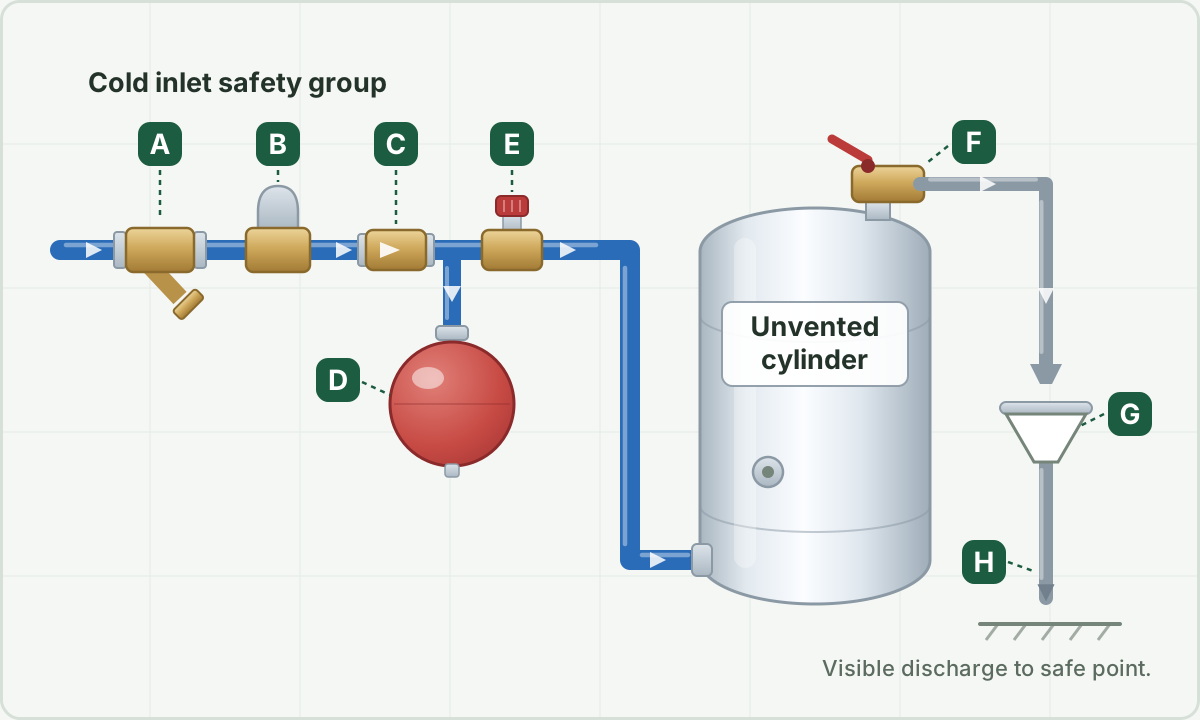
The cold mains feed enters through an inlet-control group. Expansion is handled by an expansion vessel or internal air gap. Temperature and pressure relief protects the stored hot water side. Discharge passes through a tundish and then to a safe termination.
Follow the blue cold supply through the inlet controls to the cylinder, then trace the grey safety discharge through the tundish. The letters identify the components below. A complete installation also has a hot-water outlet and, for an indirect model, primary heating connections.
This safety-device schematic omits the hot-water outlet, heating coil and expansion-relief discharge connection. Use the manufacturer’s model-specific layout to trace those connections and the complete discharge arrangement.
- A — line strainer: catches debris in the incoming supply.
- B — pressure-reducing valve: controls the incoming water pressure.
- C — check valve: prevents reverse flow.
- D — expansion vessel: accommodates the increase in water volume during heating.
- E — expansion relief valve: provides pressure relief on the cold inlet arrangement.
- F — temperature and pressure relief valve: protects the stored hot water.
- G — tundish: makes safety discharge visible.
- H — discharge route: carries the discharge towards a safe termination.
Vented vs unvented
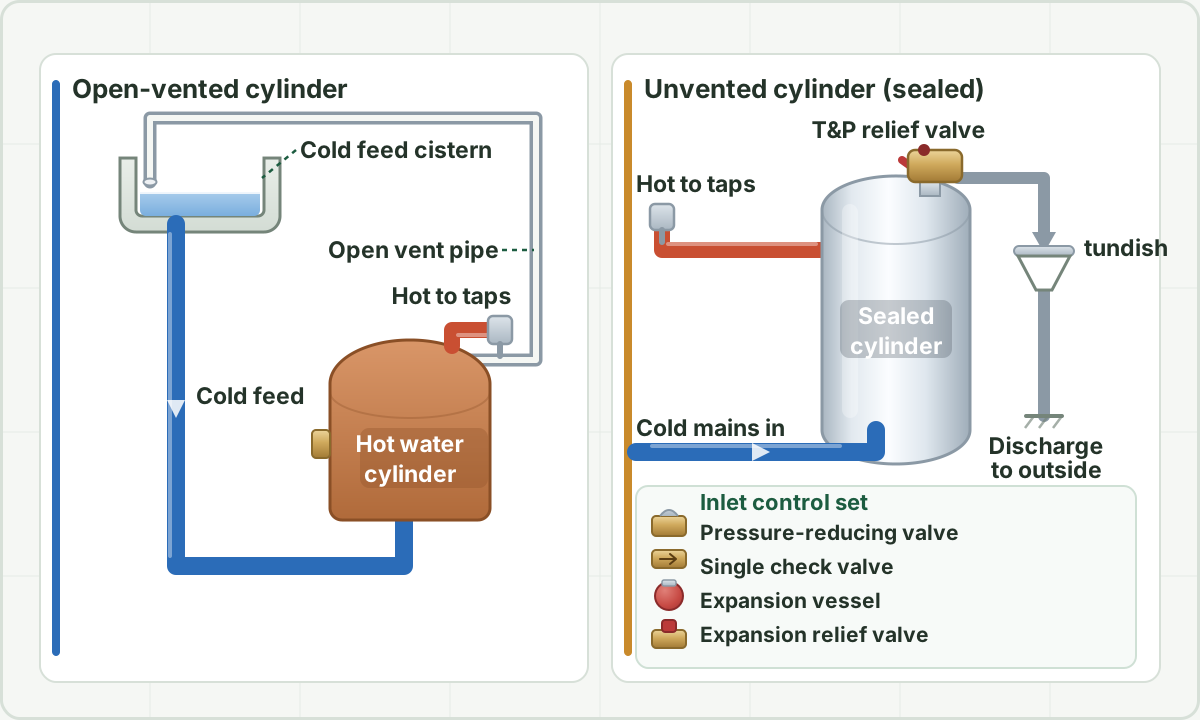
A vented cylinder is fed from a cold-water storage cistern and has an open vent path to atmosphere. An unvented cylinder is sealed and fed from the mains, so it needs dedicated expansion and safety controls. Its outlet performance depends on the incoming supply; being unvented does not guarantee strong flow at every tap.
Direct vs indirect
A direct cylinder heats the stored water directly, often with immersion heaters. An indirect cylinder heats the stored water through a coil supplied by a boiler or primary circuit. The heating method changes the controls, but the unvented safety principle remains layered protection.
Direct or indirect describes how heat reaches the stored water. Vented or unvented describes the water-supply and expansion arrangement. They answer different questions: an unvented cylinder can be either direct or indirect.
On an indirect-cylinder pipework diagram, trace the primary flow into the coil and the return back to the heat source. In normal operation that primary water stays inside the coil; it does not mix with the domestic water going to the taps. An immersion heater can also be present, so seeing one does not by itself prove the cylinder is direct-only.
The G3 safety chain
Not every unvented cylinder has an external expansion vessel. Some use an internal air space designed to accommodate expansion. Identify the arrangement in that model’s instructions before assuming a missing external vessel is a fault. The expansion space and the temperature and pressure relief valve perform different jobs; one does not replace the other.
- Control thermostat: normal temperature control.
- High-limit cut-out: stops overheating if normal control fails.
- Expansion provision: absorbs water expansion as it heats.
- Expansion relief and pressure relief: protect against over-pressure.
- Temperature and pressure relief valve: protects against dangerous stored hot-water faults.
- Tundish and discharge pipework: makes discharge visible and routes it safely.
Common faults and what they tell you
The timing and temperature of a discharge help a competent installer investigate, but a symptom does not identify a failed part on its own. The same tundish can receive discharge from more than one safety device.
- Dripping during heat-up can point to inadequate expansion capacity, lost vessel pre-charge or a reduced internal air space. The applicable checks depend on the cylinder design.
- Continuous discharge can have several causes, including excessive incoming pressure or a relief valve that is not sealing. Do not diagnose the pressure-reducing valve from the drip alone.
- Very hot or heavy discharge can indicate an over-temperature fault. Switch off the heat source if safe to do so and seek a competent unvented-system installer; never block the discharge or bypass a safety control.
- Poor hot-water flow can involve the incoming supply, inlet controls, strainers or outlet fittings. Compare the symptoms across outlets and with the cold supply before blaming the store.
- Water flowing cold from hot taps points towards the heat supply or controls. No flow at all is a different symptom. A thermal cut-out that repeatedly trips needs investigation, not repeated resetting.
Changing from vented to unvented
The conversion question comes up constantly, and the honest answer is: often yes, but three checks decide it. First, the mains supply must actually deliver the flow and pressure the cylinder needs — a survey, not an assumption. Second, the work is controlled: it needs a competent installer for unvented hot water and the correct Building Regulations notification route. Third, a compliant discharge route has to exist from the cylinder position — in real houses, finding a safe, visible tundish and D2 run is frequently the thing that decides where (or whether) the cylinder can go.
Static pressure is measured with outlets closed. Dynamic pressure is the pressure available while water flows, and flow rate is measured in litres per minute. A strong static reading does not establish that the supply can serve two showers together. The survey needs to check performance under the intended demand against the cylinder manufacturer’s requirements.
Pipe size alone does not answer the supply question either: the available pressure, route, fittings and simultaneous demand all matter. Removing the hot-water supply cistern may be possible, but check whether any other services still depend on it. The complete conversion includes the supply, controls, discharge route and ongoing servicing.
Quick answers
Is this a complete unvented cylinder installation diagram?
The labelled drawing is a revision schematic of the safety components. It omits connections including the hot-water outlet, primary heating coil and expansion-relief discharge connection. Use the manufacturer’s diagram for the exact model to identify the complete pipework and controls; this schematic is not an installation specification.
What is an unvented cylinder?
It is a sealed hot-water storage cylinder fed directly from the mains, using safety controls for pressure, temperature, expansion and discharge.
Is it illegal to fit an unvented cylinder yourself?
Unvented hot-water work is controlled by Building Regulations and needs competent installation, the correct certification/notification route and manufacturer instructions.
Why does an unvented cylinder need a tundish?
The tundish makes safety discharge visible and forms part of the discharge arrangement so faults are noticed rather than hidden.
What are the risks of an unvented cylinder?
Stored hot water under mains pressure needs layered protection: thermostat, overheat cut-out, expansion control and relief valves with a safe discharge route. Installed and serviced correctly the design is safe; the real risk is unqualified work or defeated safety devices.
Can I change from a vented to an unvented cylinder?
Usually, if the incoming main can supply enough flow and pressure, the work is done through the competent/notified route, and a compliant discharge run is achievable from the cylinder position. All three are survey questions before anyone orders a cylinder.
Something wrong, unclear or out of date? Report an issue with this guide.