
What the trap seal does, and what keeps it or breaks it on a single stack.
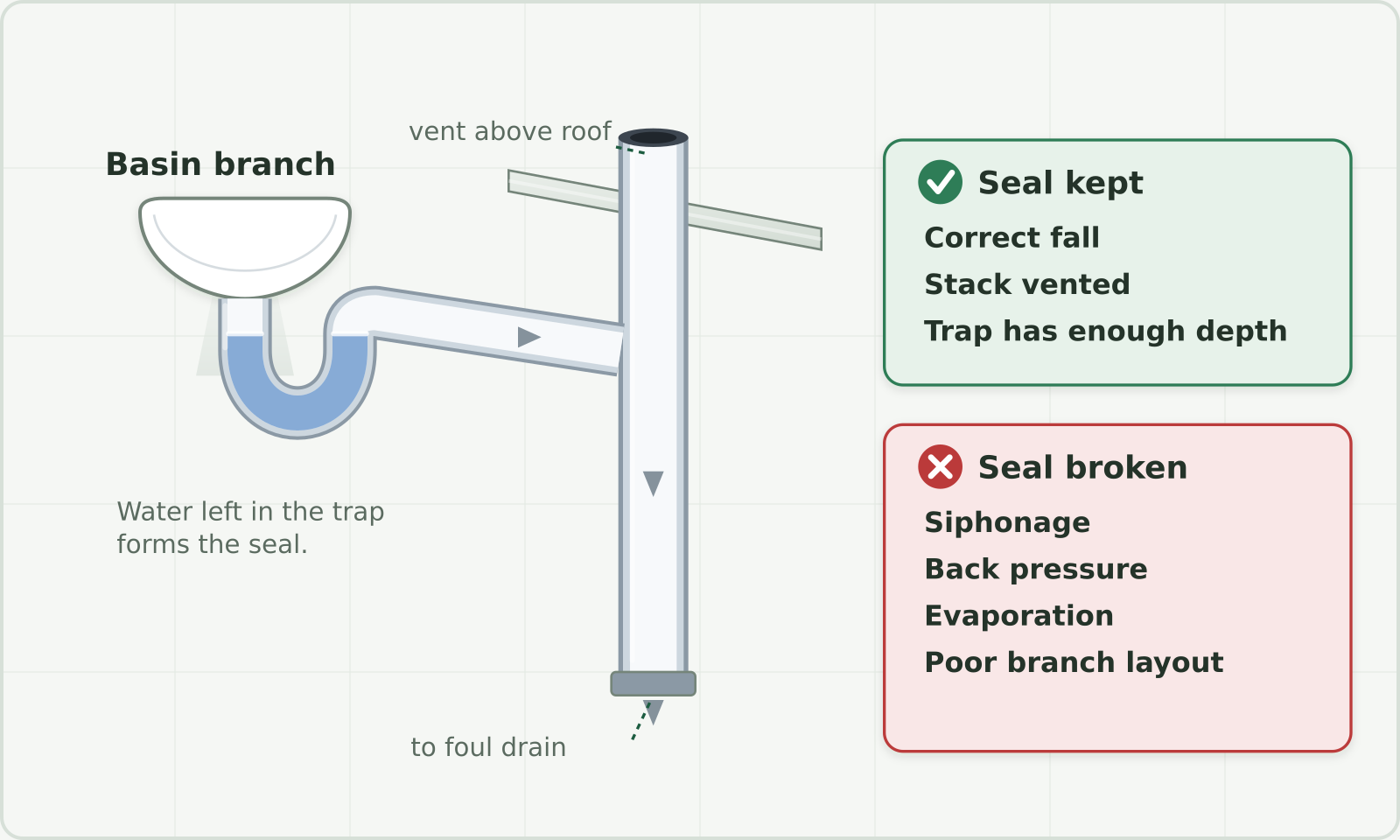
Every appliance connects to the soil and vent stack through a trap. The trap holds a small plug of water — the seal — that stops drain air and smells coming back into the room.
The diagram shows a basin and a WC connected by branch pipes to a single stack that is open at the top (the vent) and runs to the foul drain at the bottom. Keeping the stack open at both ends lets air move freely, so the pressure either side of each trap stays balanced.
The seal is kept when the stack is properly vented, the branch pipe is within its length and gradient limits, and each use refills the trap. The seal is broken by self-siphonage (a long or steep branch), induced siphonage (flow elsewhere on the stack), back-pressure, evaporation in an unused trap, or a blocked or missing vent.
Trap seal depth is commonly around 75 mm — enough water to do the job while still being refilled in normal use.
Something wrong, unclear or out of date? Report an issue with this note.